




SaaS & Software
SEO | Generative Engine Optimization (GEO) | OmniSEO
PPC | Email Marketing
We work with leadership teams to pressure-test growth strategies before misalignment shows up in pipeline, trust, or revenue.
As AI-driven search experiences reshaped how users discover software brands, they faced a critical inflection point. Traditional organic clicks were declining, replaced by zero-click answers, AI summaries, and conversational search results.
Instead of chasing shrinking SERP, the focus shifted to a bigger opportunity: owning visibility wherever buying decisions now begin—AI assistants, generative answers, and research-driven discovery paths.
The goal wasn’t rankings.
It was presence, authority, and demand capture across AI-led search environments.
Organic traffic plateauing despite strong historical SEO performance
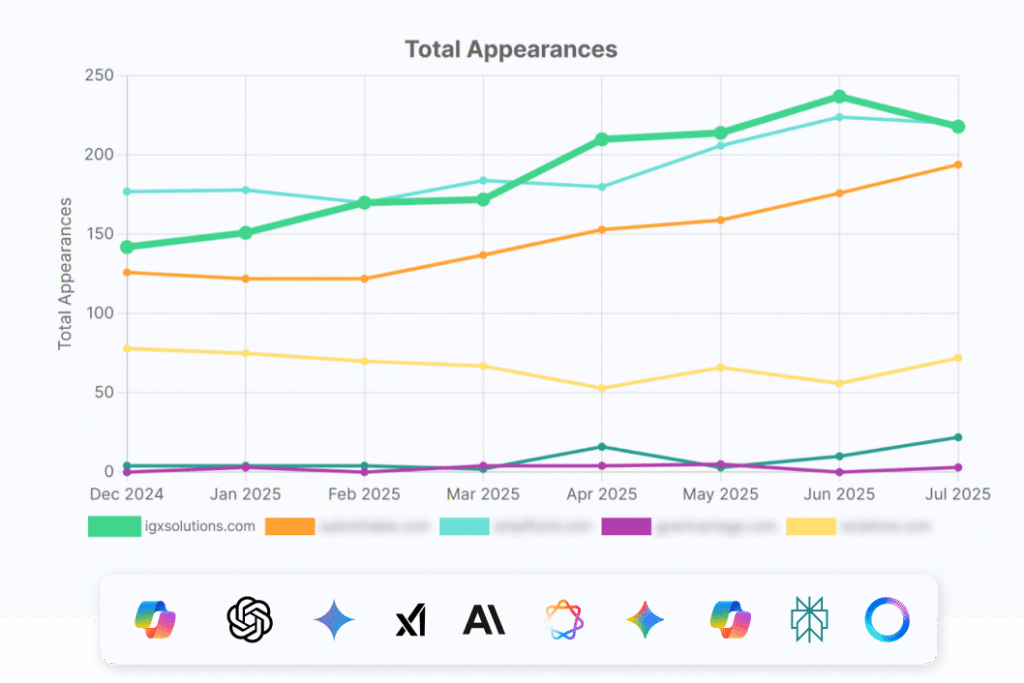
Brand mentions appearing inconsistently in AI-generated answers
Limited visibility into how AI platforms referenced or surfaced the brand
Growing concern about long-term discoverability as user behavior shifted
The problem wasn’t relevance.
It was distribution in an AI-first discovery landscape.
We implemented an AI-aware search visibility framework designed to extend the brand beyond traditional search engines and into the platforms shaping modern decision-making.
This approach focused on:
Tracking brand presence across AI-generated responses
Strengthening topical authority through earned placements and content alignment
Rebuilding content and technical foundations for both humans and large language models
The objective: become the most referencable brand in the category—by humans and machines alike.
— Marketing Manager
The client is a growth-stage SaaS company building mission-critical software for mid-market and enterprise organizations. Their platform supports complex operational workflows where accuracy, compliance, and decision confidence matter.
Headquartered in a global innovation hub, the company serves customers across North America and international markets, competing in a crowded category where trust, visibility, and category authority directly influence revenue.
Their challenge wasn’t product-market fit—it was staying discoverable as the rules of search evolved.
Long before AI-generated answers became mainstream, brand authority was treated as a compounding asset.
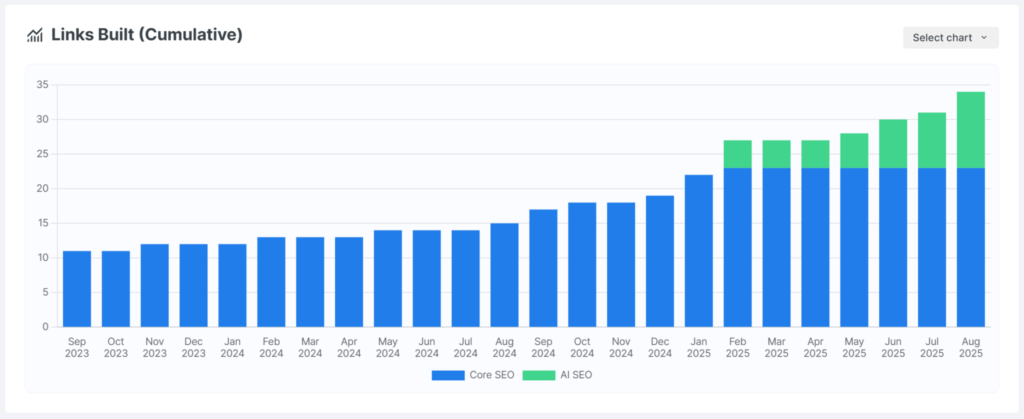
Over time, the brand earned 30+ high-relevance placements across industry publications aligned with:
Grant management
Business operations
Enterprise software workflows
These placements strengthened domain authority, reinforced topical relevance, and positioned the brand as a credible reference point for AI systems trained on trusted sources.
As zero-click searches increased, existing content was re-evaluated through a new lens:
Would an AI engine confidently cite this page?
Mapping existing pages to common AI-generated answers
Refreshing content to improve clarity, structure, and citation-worthiness
Conducting intent audits to realign pages with how users now ask questions
Publishing expert-led content that mirrors conversational AI queries
Creating capability pages to reinforce features referenced externally
Expanding long-form guides and competitor comparisons to capture research-stage demand
Updating “Who We Serve” pages to strengthen bottom-of-funnel relevance
The result: content designed not just to rank—but to be referenced.
Technical SEO remained a non-negotiable layer—especially as AI crawlers and LLMs increasingly rely on clean, structured signals.
Focus areas included:
Thematic internal linking to reinforce topical clusters
Conversion-focused on-page improvements (TOCs, CTA placement, layout clarity)
Homepage personalization by industry segment
Scalable title tag optimization for tighter query alignment
Preparing LLMs.txt files to guide AI crawler access and attribution
This ensured the brand was machine-readable, reference-ready, and conversion-optimized.

We’re the people at Pathloft who get called when growth “should be working” — but somehow isn’t.
We spend our days untangling messy funnels, questionable metrics, and strategies that looked great in slides but struggled in the real world. This blog is where we think out loud, test ideas, and share patterns we’re seeing across modern B2B growth teams.
No hype. No hacks. Just honest thinking from people who’ve sat in too many pipeline reviews to pretend everything is simple.
Expect a data-backed audit, a growth or authority blue print and the nicest people you've never met.
Every client story is a data point of impact. From reducing acquisition costs to building category authority, our partnership turns marketing challenges into measurable growth outcomes — engineered for the AI era.
By selecting “Accept All,” you consent to the use of cookies on your device to provide the best possible experience on our website.
To learn more about the cookies we use, please review our Privacy Policy.
Manage your cookie preferences below:
Essential cookies enable basic functions and are necessary for the proper function of the website.
You can find more information in our Privacy Policy.