


— Pathloft
Share
We work with leadership teams to pressure-test growth strategies before misalignment shows up in pipeline, trust, or revenue.
Marketing books have always reflected the world they were written for.
Some captured timeless principles.
Others captured tactics that worked — until they didn’t.
In 2026, the gap between what marketing books taught and how growth actually works has become impossible to ignore.
AI has changed:
how buyers discover brands
how authority is formed
how decisions are made
how signals are interpreted
Yet many teams are still operating from mental models formed in a pre-AI, pre-platform, pre-algorithmic world.
This isn’t a critique of marketing books.
It’s a necessary update to how we use them.
Across decades, the best marketing books shared a few enduring truths.
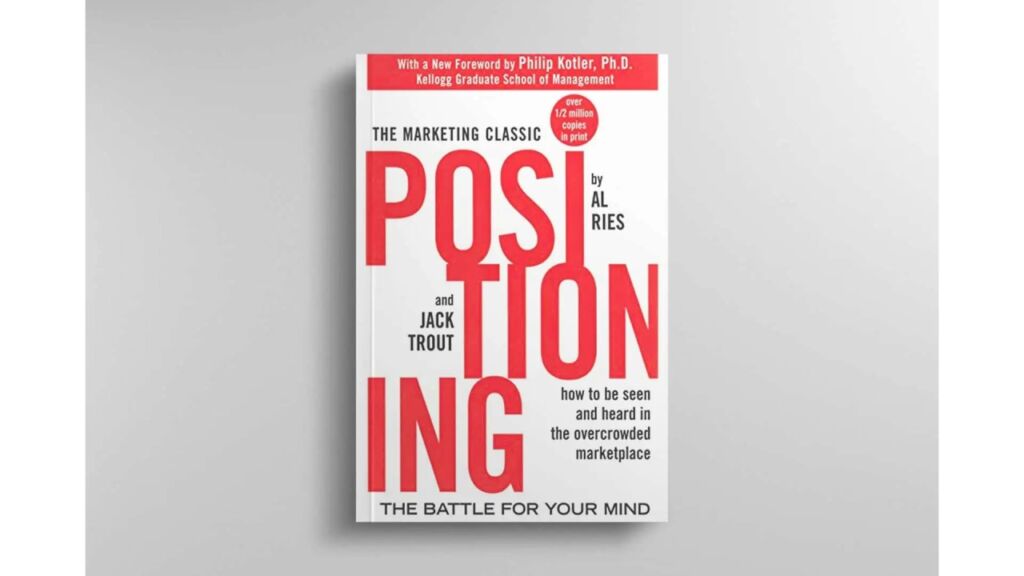
Books like Positioning by Al Ries and Jack Trout were right about one thing that still holds:
If you don’t clearly own a position in the buyer’s mind, no amount of activity will save you.
What they understood early:
buyers simplify decisions
clarity beats creativity
differentiation reduces friction
That principle hasn’t aged at all.
What changed is where positioning now lives — not just in messaging, but in how AI systems, search engines, and social platforms interpret your brand.
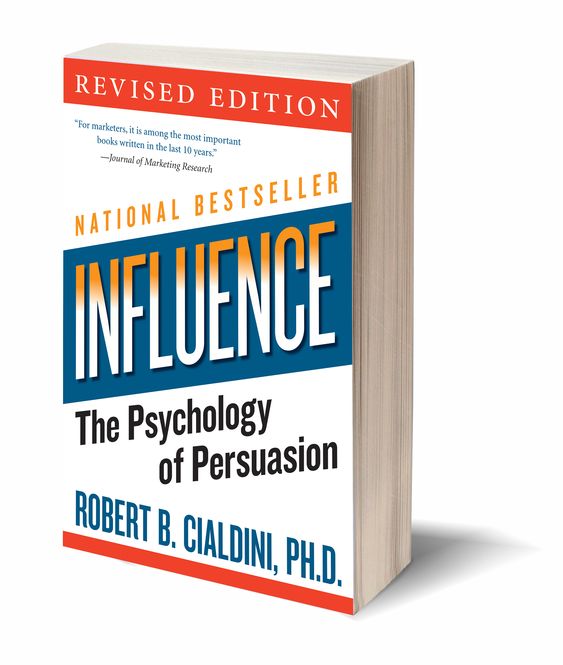
Books like Influence by PhD Robert B. Cialdini correctly identified that buyers don’t act rationally first — they act confidently first.
Trust signals have always mattered:
credibility
consistency
social proof
That insight is timeless.
What changed is the scale and mediation of trust.
Trust is no longer built only through direct interaction. It’s built through ambient exposure, reputation, and interpretation — often before a buyer is even aware they’re evaluating you.
Even older growth thinking implicitly understood this.
Books that emphasized funnels, flywheels, or customer journeys were pointing at a deeper truth:
Growth is an outcome of systems, not campaigns.
They were right to move marketers away from one-off tactics.
What they didn’t anticipate was how interdependent those systems would become once AI entered the loop.
This is where things get uncomfortable — and useful.
Most marketing books assume:
humans read your content
humans evaluate your brand
humans connect the dots
That assumption no longer holds.
In 2026:
AI summarizes your brand
AI surfaces you in answers
AI classifies your authority
AI influences what buyers even see
Most books never accounted for machine interpretation as a first-order growth factor.
That’s not a small omission.
It’s a structural one.
Content was framed as:
a way to educate
a way to persuade
a way to attract attention
What books missed is that content is now also:
a training signal for AI
a credibility signal for platforms
a consistency signal for discovery systems
Content doesn’t just speak to buyers anymore.
It teaches machines how to describe you.
Most marketing books never asked:
“What happens when your content is interpreted, not read?”
Funnels. Stages. Steps.
Helpful abstractions — but incomplete.
Modern buyer behavior is:
non-linear
recursive
heavily influenced by passive exposure
shaped before intent is conscious
Discovery now happens:
on LinkedIn
through peer discourse
via AI summaries
through repeated signal exposure
Books that centered linear journeys underestimated pre-decision influence.
Marketing books focused on:
messaging frameworks
campaign planning
channel execution
What they missed is narrative compounding.
In today’s environment:
repeated POV > isolated brilliance
consistency > creativity spikes
restraint > volume
Authority is no longer built by saying the best thing once.
It’s built by saying the same true thing clearly, repeatedly, across contexts.
That’s a system problem — not a copy problem.
Here’s the quiet truth no marketing book really prepared teams for:
When data conflicts, attribution breaks, and AI accelerates everything — growth becomes a judgment problem, not a knowledge problem.
Books taught:
what to do
how to do it
when to apply it
They didn’t teach:
what to ignore
when not to scale
how to detect false positives
how to design systems that don’t collapse under automation
That’s the gap modern teams feel — even if they can’t articulate it yet.
Marketing books are still valuable — if you read them differently.
Here’s how we recommend using them now:
If it sounds executable out of context, be cautious.
About buyers, channels, data, and interpretation.
Would this still work if discovery happens before intent?
Books inform thinking. Systems translate thinking into reality.
Marketing books explain what worked.
They don’t explain:
how those ideas interact with AI systems
how platforms reshape incentives
how signal overload changes buyer behavior
how misalignment compounds silently
That’s why many teams:
read the right books
hire smart people
run modern tools
and still feel stuck
The problem isn’t lack of knowledge.
It’s lack of system design.
We don’t replace foundational thinking.
We extend it.
Our work focuses on:
designing growth systems for AI-mediated discovery
aligning narrative, content, and execution as one system
helping teams apply judgment when data disagrees
building authority that compounds across platforms, not campaigns
Books provide the foundation.
Systems determine whether growth actually holds.
The best marketing books weren’t wrong.
They were written for a different environment.
In 2026, growth isn’t about knowing more.
It’s about designing better systems under uncertainty.
And that’s a skill no book can fully teach.
Yes — but as sources of principles, not execution playbooks.
Machine interpretation, AI-mediated discovery, and system-level thinking.
Yes, but they should stress-test ideas against modern buyer behavior and AI systems.
Because platforms, AI, and buyer behavior have changed the context those strategies were designed for.
Judgment, system design, and the ability to navigate uncertainty.

We’re the people at Pathloft who get called when growth “should be working” — but somehow isn’t.
We spend our days untangling messy funnels, questionable metrics, and strategies that looked great in slides but struggled in the real world. This blog is where we think out loud, test ideas, and share patterns we’re seeing across modern B2B growth teams.
No hype. No hacks. Just honest thinking from people who’ve sat in too many pipeline reviews to pretend everything is simple.
View all posts Pathloft helps growth leaders understand how buyers discover, evaluate, and trust brands in an AI-driven world—and design systems that compound long-term impact.
Smart marketing starts here, Proven growth plays that help you do your job — and do it better.
Actionable strategies, thought leadership, and updates from PATHLOFT— straight to your inbox.
By selecting “Accept All,” you consent to the use of cookies on your device to provide the best possible experience on our website.
To learn more about the cookies we use, please review our Privacy Policy.
Manage your cookie preferences below:
Essential cookies enable basic functions and are necessary for the proper function of the website.
You can find more information in our Privacy Policy.