

— Pathloft
Share
We work with leadership teams to pressure-test growth strategies before misalignment shows up in pipeline, trust, or revenue.
For years, B2B discovery followed a predictable pattern:
Search → website → sales conversation.
Content lived on blogs.
Social media was treated as “top-of-funnel awareness.”
That model no longer reflects how buyers actually discover, evaluate, and trust brands in 2026.
Today, LinkedIn is not a distribution channel.
It is a discovery engine.
Not because it replaced search — but because it now shapes belief before search ever happens.
Most B2B teams are still treating LinkedIn as:
a content calendar
a personal branding platform
a place to repost blogs
In reality, LinkedIn now performs a far more strategic role.
B2B discovery in 2026 is not about finding vendors.
It’s about forming belief before evaluation.
More precisely:
B2B discovery refers to how buyers first encounter, interpret, and develop trust in a company beforethey actively research solutions or speak to sales.
This happens:
before a Google search
before an AI query
before a website visit
Discovery today is shaped by:
repeated exposure to thinking
visible authority signals
consistency of perspective
social proof from peers and leaders
LinkedIn is where this pre-research phase now lives.
Modern B2B buyers are not struggling with lack of information.
They are overwhelmed by too much of it.
So discovery now works in reverse:
Buyers filter who seems credible
They absorb ideas passively over time
Only then do they actively evaluate vendors
By the time “research” begins, shortlists already exist.
LinkedIn is where those shortlists are quietly formed.
Search answers questions.
LinkedIn answers a more important one:
“Who actually understands this problem?”
Search engines rely on:
keywords
backlinks
structured relevance
LinkedIn relies on:
engagement behavior
network credibility
discourse quality
repetition of ideas over time
These are trust signals, not ranking factors.
For complex, high-risk B2B decisions, trust outweighs relevance.
On LinkedIn, authority is cumulative.
When buyers repeatedly see:
the same leaders articulating problems clearly
consistent framing across months
original interpretation instead of summaries
Belief forms before intent.
This is why so many sales conversations now begin with:
“I’ve been following your posts for a while…”
That sentence is discovery.
This is the part most teams miss.
AI systems increasingly:
summarize expert consensus
infer authority from repeated discourse
weight engagement and credibility signals
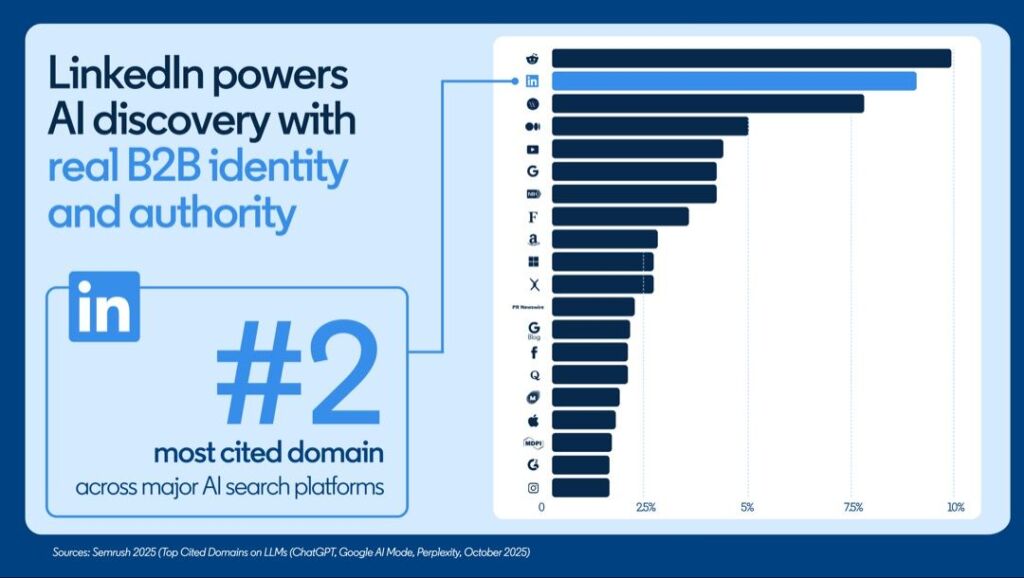
LinkedIn is one of the largest public datasets of professional thinking.
When your POV is:
coherent
repeated
reinforced socially
It becomes part of the ambient signal layer that AI systems learn from.
LinkedIn doesn’t just influence buyers.
It influences how brands are interpreted by machines.
| Channel | Primary Role | Limitation |
|---|---|---|
| Shapes belief and trust early | Hard to attribute directly | |
| Search | Answers defined questions | Happens after belief forms |
| AI systems | Summarize and shortlist | Dependent on public signals |
This is not either/or.
But LinkedIn now precedes both search and AI in the discovery chain.
Most teams optimize for:
posting frequency
engagement hacks
surface-level virality
aesthetic personal branding
This creates activity, not discovery.
The real mistake is this:
Treating LinkedIn as a content channel instead of a trust system.
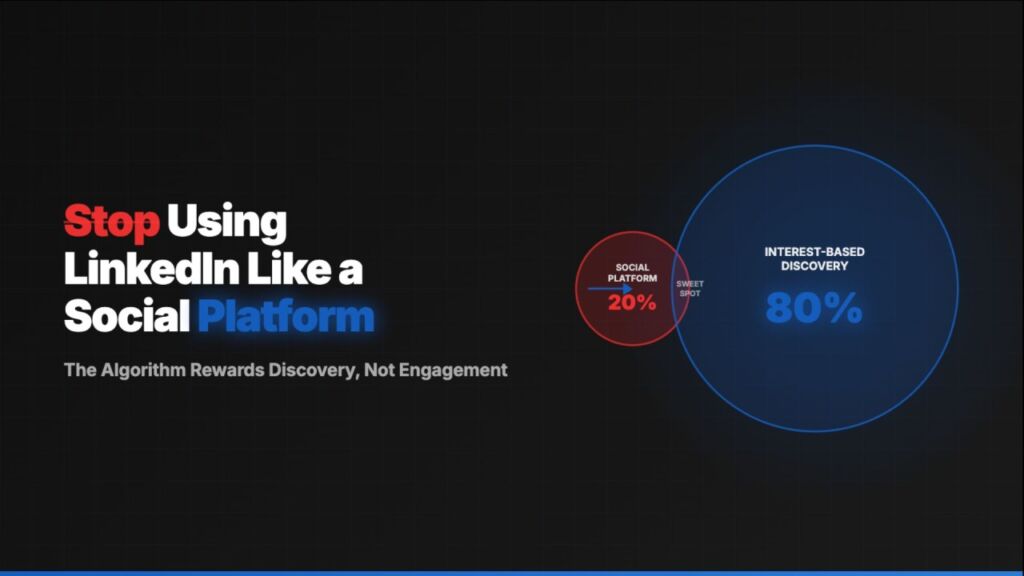
Discovery doesn’t come from going viral.
It comes from repeated exposure to coherent thinking.
At Pathloft, we view LinkedIn through three interconnected layers.
This is not about volume.
It’s about clarity:
What problems do you frame better than others?
What trade-offs are you willing to acknowledge?
What ideas do you repeat deliberately?
Buyers discover clarity before they discover companies.
Posting is not the same as being understood.
This layer is shaped by:
narrative discipline
language consistency
avoidance of buzzwords
willingness to take a stance
If your posts:
summarize instead of interpret
sound interchangeable
avoid judgment
They fail to create discovery — even if engagement is high.
Discovery is rarely one moment.
It’s accumulation.
When buyers see:
the same POV applied across contexts
leaders responding thoughtfully to real questions
restraint instead of hype
Trust compounds quietly.
By the time sales is involved, resistance is already lower.
Not tactically. Systemically.
The principles that matter most:
Point of view over frequency
One clear perspective beats daily posting without substance.
Executives over brand pages
Buyers trust people before logos.
Interpretation over engagement
A thoughtful comment beats 1,000 likes.
Repetition over virality
Discovery is built through familiarity, not spikes.
This is how LinkedIn supports demand without chasing attention.
Three structural reasons:
AI systems rely on public professional discourse
LinkedIn is one of the cleanest sources available.
Buyers are more risk-averse
Trust signals matter more than feature comparisons.
Complex decisions require human framing
LinkedIn surfaces how leaders think, not just what they sell.
This trend is not reversing.
We don’t treat LinkedIn as a posting schedule.
We treat it as part of the growth system.
Our work focuses on:
defining a defensible point of view
translating that POV into executive-grade discourse
aligning LinkedIn signals with search, AI discovery, and sales narratives
ensuring consistency across leaders, brand, and long-form content
The goal is not attention.
It’s pre-conditioned trust.
When done correctly, LinkedIn:
improves inbound quality
shortens sales cycles
reduces friction in evaluation
strengthens how your brand is interpreted everywhere else
When teams say:
“LinkedIn doesn’t drive revenue.”
What they usually mean is:
“We haven’t designed it to.”
Discovery rarely shows up cleanly in attribution dashboards.
But its absence shows up everywhere else.
In 2026, LinkedIn is not optional infrastructure.
It’s where:
beliefs form
credibility compounds
shortlists begin
trust is established before contact
Search answers questions.
AI summarizes options.
LinkedIn shapes belief.
And belief drives B2B decisions.
Because buyers use LinkedIn to assess credibility and relevance before they search for solutions. Discovery now begins with trust.
No. LinkedIn precedes SEO. It shapes perception before buyers actively research.
Consistency of thinking matters more than frequency. Clear POV beats daily posting.
Yes. Public discourse and authority signals influence how brands are summarized and surfaced by AI systems.
Optimizing for engagement instead of trust and interpretation.

We’re the people at Pathloft who get called when growth “should be working” — but somehow isn’t.
We spend our days untangling messy funnels, questionable metrics, and strategies that looked great in slides but struggled in the real world. This blog is where we think out loud, test ideas, and share patterns we’re seeing across modern B2B growth teams.
No hype. No hacks. Just honest thinking from people who’ve sat in too many pipeline reviews to pretend everything is simple.
View all posts Pathloft helps growth leaders understand how buyers discover, evaluate, and trust brands in an AI-driven world—and design systems that compound long-term impact.
Smart marketing starts here, Proven growth plays that help you do your job — and do it better.
Actionable strategies, thought leadership, and updates from PATHLOFT— straight to your inbox.
By selecting “Accept All,” you consent to the use of cookies on your device to provide the best possible experience on our website.
To learn more about the cookies we use, please review our Privacy Policy.
Manage your cookie preferences below:
Essential cookies enable basic functions and are necessary for the proper function of the website.
You can find more information in our Privacy Policy.